Introduction: The Physical Demands of Patient Care
Caring for someone who requires assistance with mobility is rewarding but physically demanding. Caregivers, whether family members or aged care staff, are at constant risk of back, shoulder, and muscle injuries from lifting and transferring patients manually. Repeated strain not only affects their health but also reduces the quality of care. This is where patient lifters play a crucial role in reducing injuries and ensuring safe, efficient transfers.
Understanding Patient Lifters and Their Benefits
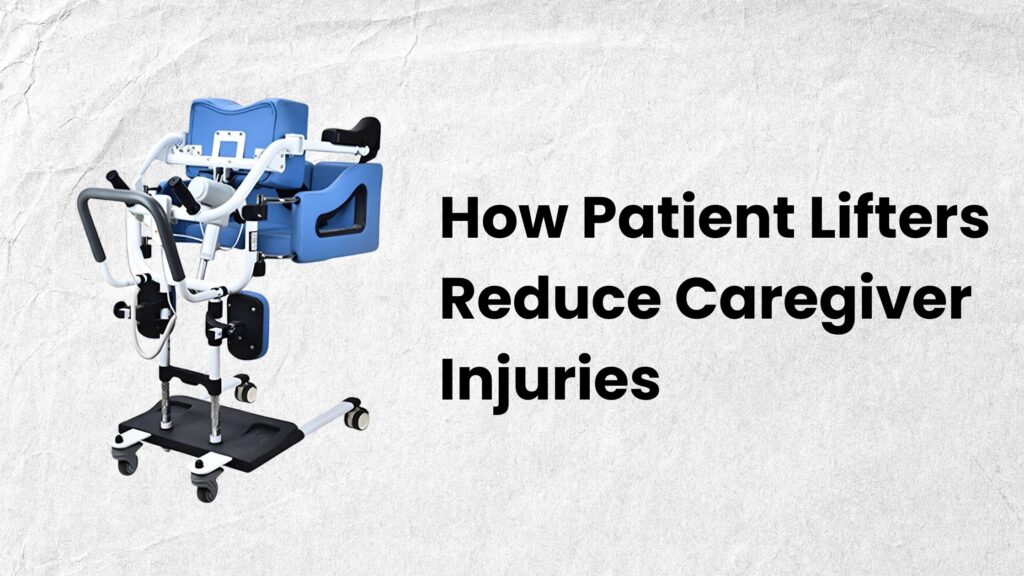
A patient lifter is an assistive lifting device designed to transfer individuals with limited mobility from one place to another, such as from bed to chair or wheelchair to toilet. By using mechanical support instead of physical strength, these devices:
- Reduce musculoskeletal strain on caregivers
- Improve patient comfort and dignity during transfers
- Provide safer and smoother movements
- Support long-term care in home and aged care facilities
You can view different options in our patient lifters section.
Key Types of Patient Lifters
1. Powered Patient Lifters
Powered lifters use electric controls to make lifting nearly effortless. They are highly recommended for frequent transfers and come with features such as adjustable armrests and seats. A good example is the powered patient lifter with armrest seat.
2. Sling Lifters – Safe Transfers for Patients
Sling lifters use a supportive sling attached to the hoist to gently move patients. They distribute weight evenly, making them ideal for fragile or bariatric patients.
3. Hoist Lifters – Efficient Mobility Assistance
Hoist lifters are versatile and designed for both residential and aged care facilities. They ensure smooth transfers and reduce manual lifting efforts, making them a practical option for long-term care.
How Patient Lifters Reduce Caregiver Injuries
Manual lifting exposes caregivers to repetitive strain injuries, slips, and accidents. Patient lifters help prevent these issues by:
- Minimising lifting effort – Reducing direct strain on the back and shoulders
- Improving transfer safety – Lower risk of falls or sudden movements during transfers
- Supporting multiple body types – From standard to bariatric patient lifters, equipment accommodates different weights safely
- Encouraging ergonomic posture – Caregivers operate the device rather than bearing physical load
This leads to fewer injuries, less fatigue, and a healthier caregiving workforce.
Choosing the Right Lifting Equipment for Home or Facility
When selecting a lifter, consider:
- Frequency of transfers (occasional vs. daily)
- Patient weight and body type
- Space available in the home or facility
- Whether the device is NDIS approved for funding support
You can book a home trial to test equipment in your own environment before making a decision.
Funding and Support Options (NDIS, SWEP, Local Adelaide Support)
In Adelaide and South Australia, patient lifters may be funded through:
- NDIS approved patient lifters for eligible participants
- SWEP programs for disability and aged care assistance
- Local support networks and occupational therapist recommendations
Our team can guide you through funding options. Reach out via our contact page for personalised advice.
Additional Safety Tips for Caregivers
- Always receive training before operating a lifter
- Perform regular equipment checks (slings, batteries, wheels)
- Ensure adequate space for safe manoeuvring
- Use proper slings suited for the patient’s needs
- Store devices correctly to extend lifespan
For a full range of options, browse our assistive equipment store.
Conclusion: Safer Care with Patient Lifters
Patient lifters reduce caregiver injuries by removing the physical strain of manual lifting and offering safe, reliable transfers. Whether you need a sling lifter, powered patient lifter, or bariatric lifter, these devices ensure safety for both caregiver and patient. With funding support and expert advice, families and aged care facilities in Adelaide can find the right solution for long-term comfort and care.
FAQs About Patient Lifters
- What is the difference between a manual and electric patient lifter?
Manual lifters require physical effort with a hydraulic pump, while electric lifters use powered controls for easier transfers. - Are patient lifters covered under NDIS?
Yes, many models are NDIS approved patient lifters, and funding may be available depending on your plan. - How do patient lifters help prevent injuries?
They minimise manual lifting, reducing the risk of caregiver back injuries and ensuring safer patient transfers. - Can patient lifters be used at home?
Yes, many compact models are designed for residential settings. You can book a home trial to check suitability.
5. What weight capacities do lifters support?
Different lifters support various ranges, including bariatric patient lifters designed for higher weight capacities.