Introduction: Ensuring Safety in Patient Transfers
Patient transfers are one of the most physically demanding tasks for caregivers, whether in a hospital, aged care facility, or home setting. Without proper equipment, transfers can cause injuries to both the patient and the caregiver. A patient lifter is designed to minimise these risks, ensuring safety, dignity, and comfort in every transfer.
In Adelaide, more families and aged care providers are turning to NDIS approved patient lifters and other lifting solutions to make daily care safer and more efficient.
Understanding Patient Lifters and Hoists
A patient lifter (also called a hoist or lifting aid) is a mobility device that helps move individuals with limited mobility from one position to another. Unlike manual lifting, which relies heavily on physical strength, lifters use mechanical or powered support to complete transfers safely.
They are suitable for:
- Bed-to-chair transfers
- Wheelchair-to-toilet transfers
- Assisting bariatric patients
- Supporting home-based care for long-term conditions
You can view our range of patient lifters here.
Common Types of Patient Lifting Equipment
1. Powered Patient Lifters
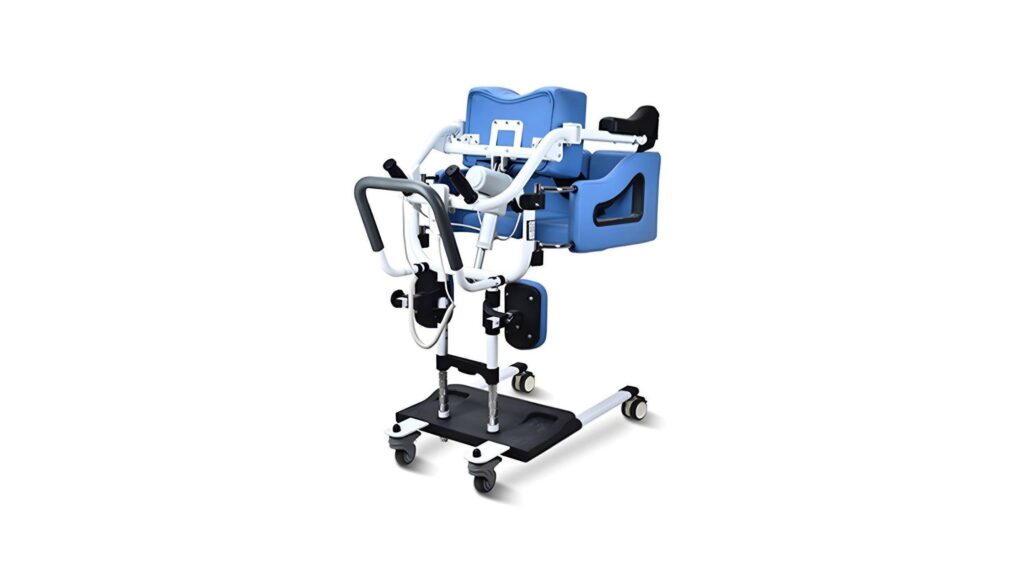
Electric-powered lifters are user-friendly, reducing manual strain for caregivers. They are ideal for frequent transfers and come with advanced safety features. One example is the powered patient lifter with armrest seat.
2. Sling Lifters – Supportive and Comfortable Lifting
Sling lifters use fabric slings to cradle the patient, ensuring secure transfers. They are commonly used for fragile patients who need maximum support.
3. Hoist Lifters – Manual and Motorised Options
Hoist lifters provide versatile lifting solutions. Manual models are cost-effective, while motorised versions allow smoother transfers with minimal effort.
4. Bariatric Patient Lifters – Safe Handling for Larger Patients
Designed with a higher weight capacity, bariatric patient lifters are essential for safe and dignified handling of larger patients, preventing strain on caregivers.
5. Portable Lifters – Flexible Solutions for Home Care
Portable lifters are lightweight and easy to move, making them suitable for home care where flexibility and storage space are key considerations.
Benefits of Using Patient Lifters
- Reduced caregiver injuries – Minimise risks of back and shoulder strain
- Enhanced patient safety – Secure slings and stable lifting mechanisms prevent falls
- Greater independence – Patients experience smoother, more comfortable transfers
- NDIS funding support – Eligible users can access financial assistance for equipment
- Versatility – Suitable for hospitals, aged care homes, and private residences
For flexible purchase options, visit our store.
Choosing the Right Patient Lifter for Your Needs
When selecting a lifter, consider:
- Frequency of use (daily vs occasional transfers)
- Patient’s weight and mobility level
- Available space in the care environment
- Compatibility with slings and accessories
- Whether NDIS approved patient lifters are required for funding
If unsure, you can book a home trial to test different models before making a decision.
Occupational Therapist Recommendations and NDIS Approved Options
Occupational therapists often recommend patient lifters as part of a safe care plan. Many lifters are also NDIS approved, allowing families to access funding for essential mobility aids. Working with healthcare professionals ensures the equipment chosen meets both clinical and practical needs.
Maintenance and Safety Tips for Patient Lifting Equipment
- Inspect slings, straps, and frames regularly
- Charge batteries fully for powered lifters
- Clean and store equipment according to manufacturer guidelines
- Train caregivers on proper usage and positioning techniques
- Schedule professional servicing for long-term safety
For tailored advice, you can contact us.
Conclusion: Enhancing Safety and Independence with Patient Lifters
Patient lifters play a central role in making transfers safe, efficient, and comfortable. From powered lifters for daily use to portable lifters for home care, the right equipment ensures both patients and caregivers are protected from unnecessary risks. With professional guidance and NDIS support, families and aged care facilities in Adelaide can confidently choose the most suitable lifting solution.
FAQs About Patient Lifters
- What is the main purpose of a patient lifter?
It assists in safely transferring patients with limited mobility, reducing caregiver strain and preventing injuries. - Which type of lifter is best for home care?
Portable lifters are usually preferred for home settings due to their flexibility and ease of storage. - Are patient lifters funded under NDIS?
Yes, many models are NDIS approved patient lifters, making them accessible for eligible participants. - How often should patient lifters be serviced?
Regular checks should be done weekly, with professional servicing scheduled at least once a year. - Can patient lifters handle bariatric patients?
Yes, specialised bariatric patient lifters are designed with higher weight capacities for safe handling.