Introduction: Ensuring Safe Patient Transfers
Transferring a person safely is one of the most important tasks for carers, nurses, and family members. A patient lifter, also called a sling lifter or patient lifting hoist, reduces the risk of injury for both the patient and the caregiver. In Adelaide, many aged care facilities, hospitals, and home care settings rely on assistive lifting equipment to improve safety and comfort. Choosing between a manual patient lifter and an electric patient lifter depends on mobility needs, the environment, and funding support such as NDIS approved patient lifters.
What Are Patient Lifters?
Patient lifters are mechanical devices designed to move a person from one position to another safely—such as from a bed to a chair, or from a wheelchair to the bathroom. They support patients with limited mobility and help reduce the strain on carers.
Types of Patient Lifters: Manual and Electric
- Manual Patient Lifters: Operated with hydraulic pumps or levers, requiring physical effort from the caregiver.
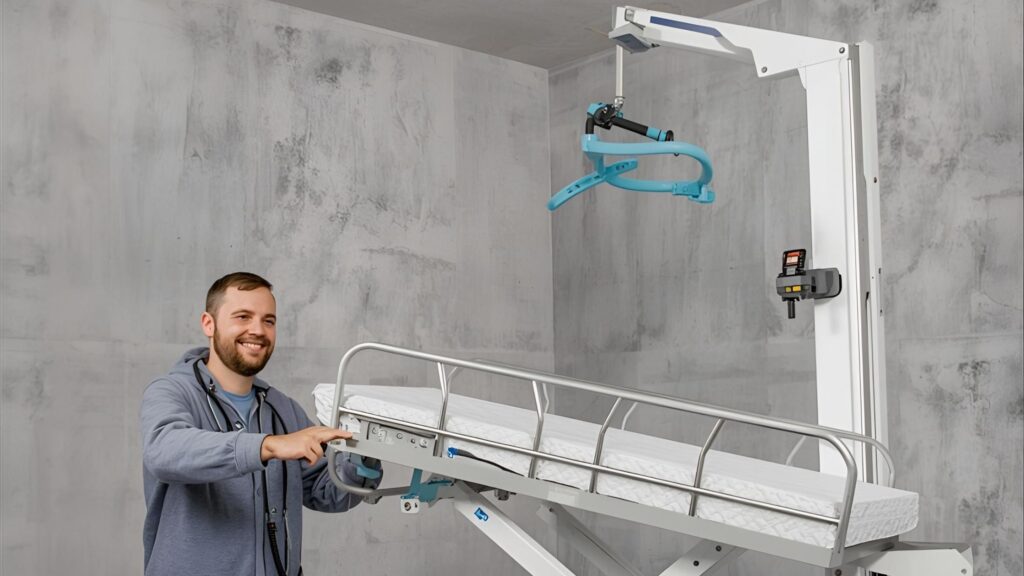
- Electric Patient Lifters: Powered by a motor and rechargeable battery, controlled with a handset or buttons for smooth operation.
Pros and Cons of Manual Patient Lifters
Advantages
- Affordable option: Manual lifters are generally less expensive than electric models, making them attractive for budget-conscious families.
- Durable: Fewer electronic components mean reduced maintenance issues.
- No reliance on electricity: Useful in situations where power access is limited or during power outages.
Limitations
- Physical effort required: Carers must pump or lever the lifter, which can be tiring over time.
- Slower transfers: Adjustments take longer compared to electric models.
- Less suitable for bariatric care: Heavier patients may require more effort, making electric options safer.
Pros and Cons of Electric Patient Lifters
Advantages
- Ease of use: Electric models require minimal physical effort, reducing strain on carers.
- Smooth transfers: Controlled movements improve patient comfort and safety.
- Supports heavier patients: Many bariatric patient lifters are electric, designed for higher weight capacities.
- NDIS support: Many NDIS approved patient lifters are electric, ensuring compliance with funding programs.
Limitations
- Higher cost: Electric lifters are more expensive upfront.
- Maintenance and charging: Batteries must be charged regularly and may require replacement over time.
- Heavier equipment: More difficult to transport compared to compact manual lifters.
Choosing the Right Lifter for Your Needs
Selecting between manual and electric depends on:
- Frequency of use: Occasional transfers may suit a manual lifter, while frequent transfers are easier with an electric model.
- Caregiver capacity: If carers have limited strength, an electric model is safer.
- Patient requirements: Heavier or bariatric patients benefit from electric lifters.
- Funding and support: Check if you qualify for NDIS approved patient lifters or support from local providers in Adelaide.
You can browse options directly in our Patient Lifters Store or review models like the Powered Patient Lifter with Armrest Seat designed for comfort and safe transfers.
Additional Tips for Safe Patient Transfers
- Always check the sling’s condition before each use.
- Position the lifter on a flat, stable surface.
- Ensure brakes are engaged during patient positioning.
- Train all carers in safe use of the equipment.
- Book a home trial to test which model suits your environment.
For professional advice, you can contact our team to discuss suitable lifter solutions for aged care facilities or home use.
Conclusion: Making the Right Choice for Home or Aged Care
Both manual and electric patient lifters play a vital role in safe transfers. Manual lifters are cost-effective and reliable, while electric lifters provide ease of use, safety, and comfort. The decision should be guided by patient needs, caregiver capacity, and funding eligibility.
Key Takeaways:
- Manual lifters are affordable and durable but require more physical effort.
- Electric lifters are easier to use and ideal for frequent or bariatric transfers.
- NDIS-approved models ensure compliance and financial support.
- Choosing the right lifter improves safety and reduces injury risk.
FAQs about Manual vs Electric Patient Lifters
- What is the main difference between a manual and electric patient lifter?
Manual lifters use hydraulic pumping, while electric lifters use a powered motor for easier transfers. - Which lifter is best for home care in Adelaide?
It depends on your needs. Manual lifters are budget-friendly, while electric lifters provide smoother, safer transfers for frequent use. - Are electric patient lifters covered by NDIS?
Yes, many NDIS approved patient lifters are electric models, and funding can support their purchase. - Do manual lifters require a lot of strength?
Yes, they require pumping action, which may be tiring for carers over time. - Can I try a patient lifter before buying?
Yes, you can book a home trial to test equipment in your environment before making a decision.